

Remembering the Forgotten Island: Filipino Representation, Recursion, and the Problem of Recognition
By Jered Mabaquiao
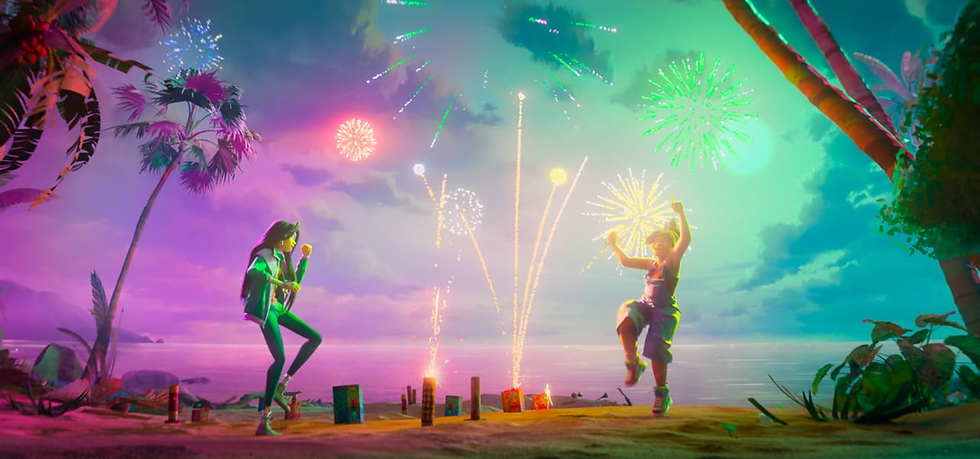
I’d been following the production of Forgotten Island since I was working on my dissertation through the early 2020s. I was excited, maybe overly so, to see a major animated film build its world around Filipino culture, folklore, and narrative mythologies. I continue to be excited about where Filipino culture is going. What’s interesting to me, though, is how this new representational crux immediately raises another question about who exactly this film is for. Across X, Reddit, Facebook, and TikTok, Filipino Americans, Filipinos throughout the diaspora, Filipinos in the Philippines, and non-Filipinos debate the terms of the film’s cultural representation, reception, and authenticity. These questions are clearly relevant to Forgotten Island, but they also become easily oversaturated in the wake of identity politics. Is this really us? Is this Filipino enough? Is this too Filipino? Who gets to decide?
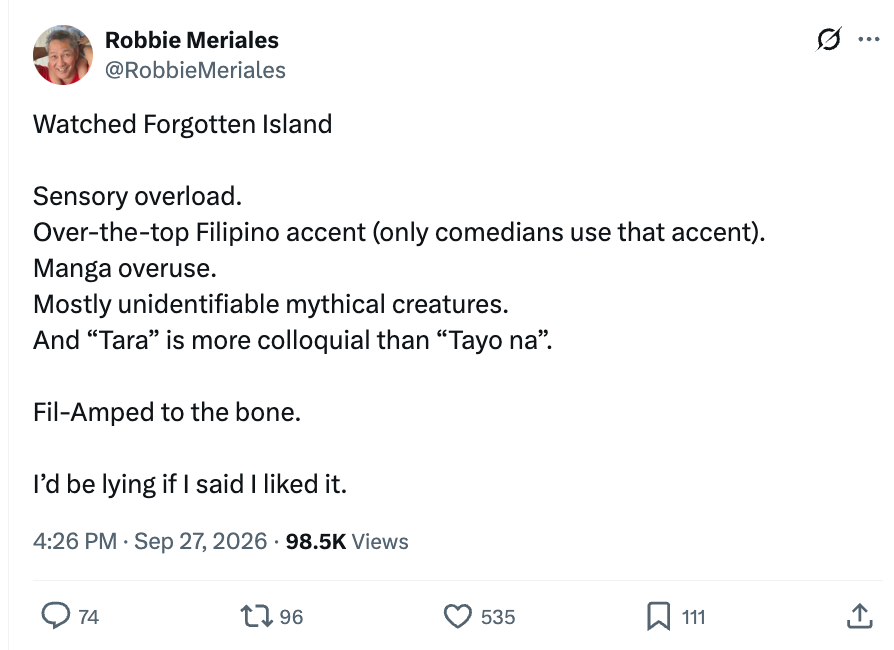
This review isn’t so much interested in defending the Filipino representation of Forgotten Island as it is interested in articulating what its reception reveals about political and social solidarity across entertainment cultures in the U.S. and the Philippines. Representation, after all, does not begin when Filipino characters suddenly appear onscreen or when Filipino labor gets recognized behind the scenes. Filipino labor has long been embedded within animation itself, especially through the outsourced labor of animators working for American studios, where Filipino artists have participated in producing the cultural artifacts that have struggled to see Filipino lives emerge on the silver screen. Therefore, this history makes Forgotten Island strangely unique and important because Filipino culture moves from somewhere behind the image to the declared foregrounded subject of the image.
Still, notes of a so-called “crab mentality” resonate throughout the film’s reception. The term is imperfect, especially when it becomes shorthand for explaining away disagreement within Filipino communities, but its recurrence online interests me because this mode of criticism begins to look recursive. Filipinos debate whether other Filipinos have represented Filipinos correctly, frequently through standards of legibility already mediated by Hollywood, Americanization, migration, and colonial history. I’ve described a similar process elsewhere as intercultural recursivity, where "Filipinx" subjects negotiate colonial or neocolonial injury while continuing to seek recognition through norms inherited from those histories. Forgotten Island places this recursion almost everywhere, from its narrative investments in memory and return to the debates that have surrounded the film itself.
Certainly, there is room for criticism. Between the formal “Tayo na,” the karaoke, family gatherings, folklore, and Journey’s “Don’t Stop Believin’,” the film occasionally feels like a Filipino cultural bingo card. One could watch the opening act and count the signs of Filipinoness as they arrive, but I’m not convinced this accumulation necessarily makes the film culturally shallow. Lechon, karaoke, jeepneys, Tagalog, family gatherings, accents, gestures, and folklore can operate as something other than decorative proofs of authenticity. Sometimes stereotypes are stereotypes, and sometimes culturally familiar gestures become part of the grammar through which relationships are made visible, especially when the familiarity of those gestures produces recognition before the narrative ever has to explain them.
I think it is a fair observation for anyone who has seen Forgotten Island that the film is unapologetically Filipino. The more difficult question is what we expect “unapologetically Filipino” to look like. As a media consumer who grew up during the boom of East Asian representation in U.S. entertainment media, moving between films like Lilo and Stitch, or Brother Bear, Forgotten Island gets closer to something like narrative abundance. I’ve remained suspicious of the proposition that increased Asian visibility necessarily produces political progress because contemporary Asian American media can make subjects increasingly visible while keeping them constrained by stereotype, commodification, and recognizable narratives of diasporic trauma. Forgotten Island does not magically escape this representational economy. DreamWorks is, obviously, a corporate apparatus for nostalgia, recognition, and high-pathos circuitry, and the film remains part of an entertainment industry where culture is inevitably packaged, circulated, and sold.
But something more interesting happens inside this apparatus.
I could deeply identify with the community orientation of the first act and with the competing impulses embodied by Jo and Raissa, of belonging somewhere while imagining yourself elsewhere, of loving the familiarity of home while also feeling the desire to break away from it. Jo’s father is in America, Lola cares for Jo, Raissa aspires toward Caltech. Their futures are spatial before they are intimate and personal, and America exists as an imagined elsewhere carrying the promise of education, mobility, family, departure, and perhaps some kind of arrival. What’s striking to me is that Forgotten Island never needs to make the United States the final grounds for cultural reformation (though to be sure, there is a reading of the film that invites that perspective). The film instead turns back. Its portal keys, family histories, photographs, stories, montages, and mythological creatures keep asking its characters to reconsider what supposedly has been left behind.
This return matters because media itself has long participated in how diasporic Filipino children imagine the Philippines. Film and television become part of a cultural repertoire through which children encounter language, humor, family relationships, environments, celebrities, food, behavior, and cultural habits, while those images inevitably mingle with what children already know from their families and communities. A family animation about Filipino folklore is therefore never “just” representation, particularly for younger diasporic spectators who may encounter Forgotten Island as one of the cultural objects through which Filipinoness itself is recognized, questioned, repeated, rejected, or remembered. I’m interested in this possibility because the film does not simply show culture to an audience insofar as it participates in the process through which an audience learns how to look more closely at this nebulous concept called culture.
Learning, though, may not quite be the right word. Recognition and legibility are perhaps more useful here because a diasporic audience does not arrive at Forgotten Island empty-handed. My friend, Cheska Nelle, reminded me, and following Yen Le Espiritu and Dawn Bohulano Mabalon’s thinking about the palimpsest of nation and diaspora, there are already mental, political, and social layers present before the film ever appears: family memory, community practices, Filipino and American media, language or partial language, food, stories, social media, cultural performance, migration, and experiences both with and without the Philippines. For some Filipino American children, seeing karaoke, lechon, family gatherings, or hearing familiar words onscreen may not teach them what Filipinoness looks like so much as name something they already know. Sometimes the recognition is simply, “Oh, that’s what this thing I’ve always known looks like onscreen,” while other moments might produce the stranger realization that something your family does is not "just your family being your family" but, you, them, and we, are part of a larger cultural practice.
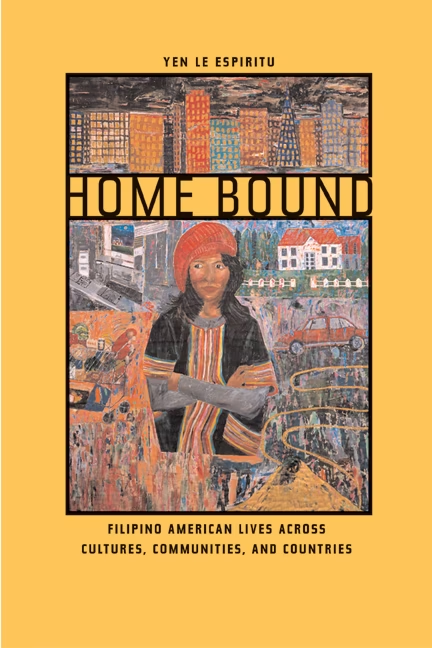
The film becomes another layer rather than the origin of someone’s Filipinoness, and this is where the palimpsest works alongside recursivity for me. People use what they already know to interpret the film, while the film sends them back to reinterpret, name, or question what they already knew. For non-Filipino spectators, legibility works differently because the abundance of cultural references can function as an introduction, but I want to stay away, for now, from a clean binary between Filipino recognition and non-Filipino legibility. Diasporic audiences themselves arrive from radically different positions of language, generation, geography, mixed families, migration, and proximity to the Philippines.
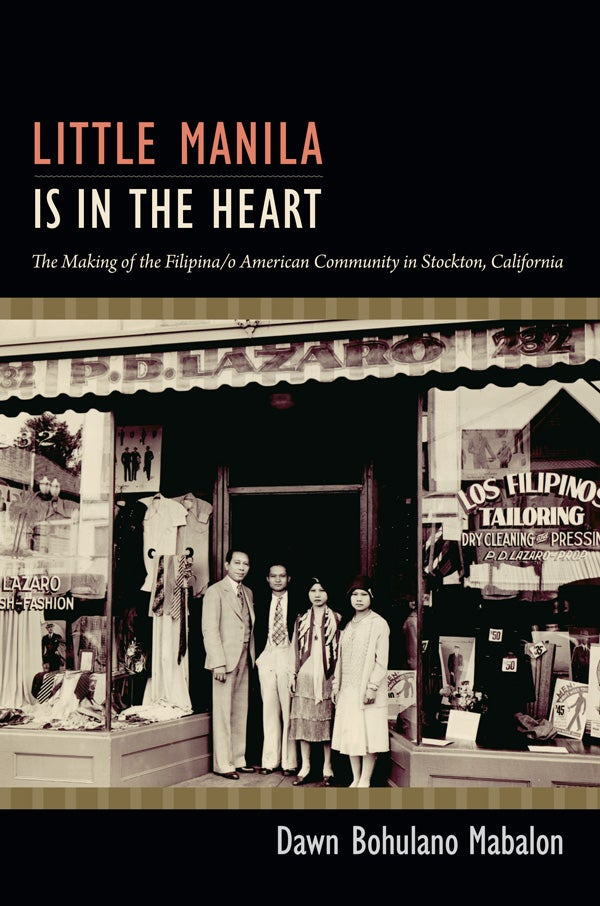
What interests me here is the movement between internal recognition and external legibility, and how both might become necessary for narrative preservation if a cultural object is going to maintain coherence beyond the community that immediately recognizes it.
The film’s proposition that “the more powerful the memory, the more powerful the object” becomes much more useful to me than the question of representational accuracy. The viewfinder, photographs, montage, portal objects, and family-history materials turn memory into something worth being embedded in. Memory can be handled, carried, lost, recovered, and passed between people, while objects become powerful precisely because relationships give them meaning. Animation becomes an unusually appropriate form for this process because it materializes what cannot otherwise be retrieved. There is something recursive in the form itself when Filipino animators have historically helped animate other people’s stories and now animation becomes the form through which Filipino cultural memory gets reanimated. Stories that have been forgotten don’t really ever return “intact”.
They have to be reanimated.
Here Forgotten Island brushes against something darker.
When the opening announces that “there is a forgotten world, beyond,” I can’t help but wonder what exactly has been forgotten and by whom. What does it mean for a U.S. studio to animate a Filipino world when the political relationship between the United States and the Philippines is itself structured by colonial occupation, military power, migration, labor, cultural exchange, and selective forgetting? The film does not become an allegory of U.S.-Philippine relations simply because these histories exist, nor do I think it needs to become one. Its vocabulary of disappearance, separation, inheritance, and return nevertheless makes this history difficult for me to ignore. Forgetting is never politically neutral, especially when one country’s memory of another has been shaped by empire.

This is, of course, how I initially perceive the manananggal.
The vampire has historically been useful because it transforms desire, repression, contamination, consumption, and hunger into a body, but the manananggal makes the metaphor into an even stranger thing. Its defining feature is separation, with the upper body tearing itself away from its lower half and leaving behind a body divided against itself. I don’t want to claim that Filipinos are somehow collectively represented by the manananggal because such a reading would reproduce exactly the essentialism I’m resisting. Manang herself gives us something more specific to hold onto because her physical division exists alongside another kind of separation: she has no people, no family, no community she understands herself as belonging to. Her separation is social and relational as much as it is bodily.
The Baybayin inscribed on Manang’s chest, which viewers have read as kapwa, makes this division even more provocative. Kapwa does not simply mean “community” but gestures toward shared selfhood and a relational understanding of the self through others. Reading kapwa alongside Manang therefore changes what her divided body can mean. I’m less interested in making the manananggal stand in for diaspora than in asking why a figure defined by physical separation carries a term that insists upon relationality. If separation gives Manang her physical form, what gives her something to remain connected to?
The manananggal gives this contradiction a pulse.
Its hunger matters. Its division matters. But what is Manang actually hungry for? One answer might be the community and memory taken from her, and kapwa becomes a possible counterpoint to the isolation that gives her pain its shape. I’m still suspicious of where this takes us because narrative reconciliation is oftentimes a catch-all concluding remark for films wanting to comment on unity or solidarity.
The familiar children’s-animation explanation that the villain was misunderstood, excluded, or wronged can too easily make reconciliation a solution to divisions produced by something much deeper than misunderstanding. A community recognizes its wrongdoing, the antagonist receives recognition, everyone comes back together, and solidarity becomes something restored through the narrative itself.
I don’t know if kapwa resolves Manang so easily when we read her through a lens of materialized social and political conditions across the stratified lines of diaspora. If kapwa is not just an ethical duty to treat and recognize our people with dignity and respect but an understanding that the self exists relationally through others, why is it that when we try to do something for Filipino communities we are not always met with a standard of connectivity that would help all of us thrive?
Crab mentality comes back into the review here, although I don’t mean it as an essential Filipino tendency toward competition or resentment. The contradiction is more interesting than that. We can possess a cultural language for shared selfhood while continuing to reproduce conditions about who belongs, who is Filipino enough, whose cultural knowledge counts, whose politics are acceptable, whose work receives support, and who remains somewhere at the edge of the community trying to permeate the bubble.
Manang’s hurt, isolation, and loneliness become deeply recognizable to me for this reason. Filipino and Filipino American spaces can produce belonging and rejection at the same time, and both avenues can be true. Community organizations, student groups, families, cultural events, and diasporic spaces have given me ways to recognize myself through other people, while some of those same spaces have left me wondering what kind of recognition truly produces sustainable historical, social, and political solidarity.
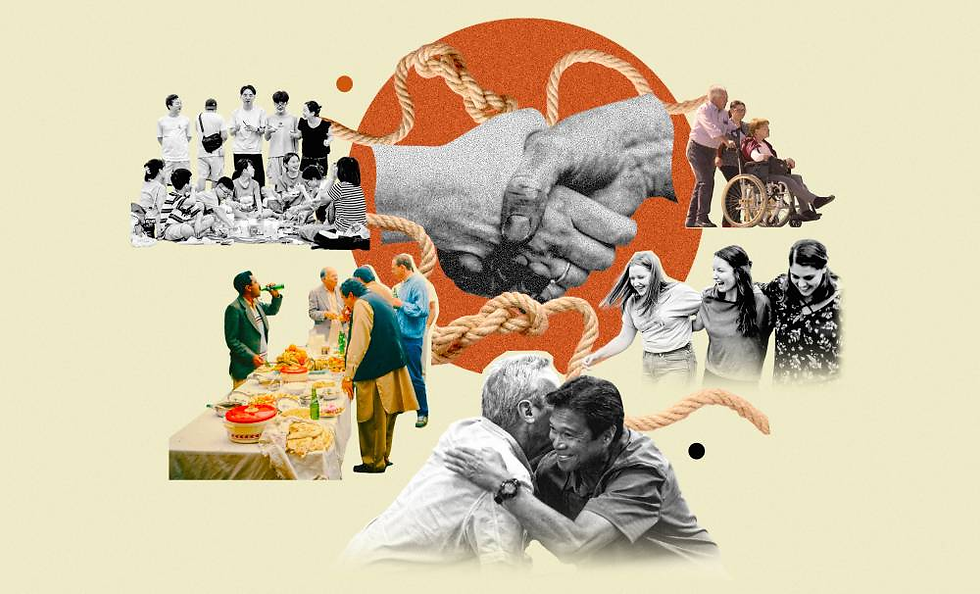
I understand kapwa as a possible ethics of connection, but I don’t necessarily experience it as reconciliation to isolation, and Manang’s arc gives this contradiction a kind of catharsis without resolving my suspicion that some Filipino and Filipino American relationships may not actually be interested in building the solidarities our language for community would seem to promise.
Maybe, more productively, a question here is about what really keeps someone attached to people, place, family, memory, or life when those attachments begin to disappear. Pain, desire, forgetfulness, migration, and separation circulate not just through Jo, Raissa, and Manang but, of course, through the creatures, objects, spaces, and memories surrounding them. Even the film’s movement between worlds begins to resemble the recursive structure of diasporic identification, where returning never quite means going backward because the subject doing the returning has already changed. Kapwa can name the relationship capable of surviving separation, but naming the relationship does not guarantee its existence.
I’m therefore less interested in determining whether Forgotten Island passes some authenticity test. The more compelling task is, as oftentimes, deciding what we do with the film now that it exists. Perhaps there is room for a reparative relationship with representation, not an uncritical celebration of visibility, but an attention to what an imperfect cultural object makes possible. Forgotten Island cannot preserve Filipino history for us. DreamWorks cannot do the work of archives, families, historians, artists, community organizations, or diasporic subjects. A movie cannot repair colonial history simply by putting aswangs onscreen.
But it can make someone ask. It can make someone curious beyond the scope of Filipino recursivity and discursivity.
The task Forgotten Island leaves us with is survival through memory-making. Memory-making is difficult precisely because it asks us to remain ethically committed to relationships with “the past” while simultaneously looking toward, fostering, and stewarding “the future.” Cultural preservation cannot mean freezing Filipinoness into a recognizable collection of foods, songs, monsters, phrases, accents, and family rituals, because preservation also requires accepting that culture moves, changes, fractures, repeats itself, and returns differently across generations and across oceans. Recursion does not necessarily mean repetition without change. Sometimes returning to the same story reveals how much the people telling it have changed.
The film’s most useful provocation, then, may not be that Filipino culture has finally arrived on the global animated screen. Forgotten Island reminds us that representation was never the endpoint we sometimes imagined it to be.
Surely, some of our stories have been, are, and will be forgotten and the medium of film remembers a portion of them but what survives next is still our responsibility.
And from there, perhaps, another story gets told.


Comments